
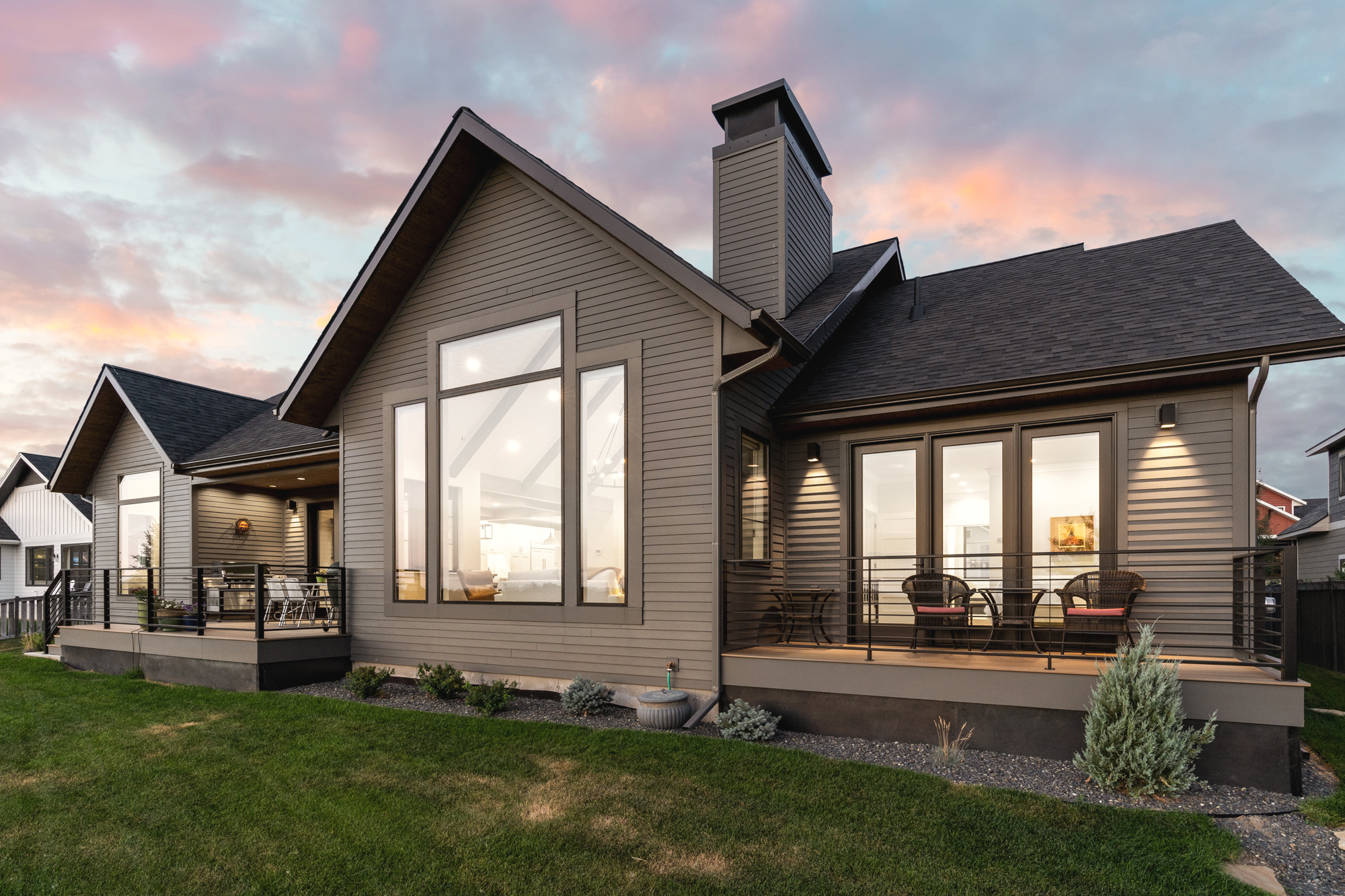
If you're serious about building a custom home in Montana, you've probably narrowed your search to a few key areas. Bozeman and Paradise Valley are two of the most sought-after locations in the state, and for good reason. Both offer access to world-class outdoor recreation, strong property values, and a quality of life that's hard to match anywhere else.
But they're not interchangeable.
After 30 years of designing custom homes in both areas, I can tell you that the decision between Paradise Valley and Bozeman comes down to trade-offs. What you gain in one location, you often give up in the other. Property size, proximity to town, infrastructure costs, climate differences, and building timelines all vary between the two.
Here's what you need to know if you're trying to decide where to build.
Paradise Valley runs roughly 50 miles from Livingston south to Gardiner, following the Yellowstone River corridor. It's defined by open ranch land, the Absaroka Mountains to the east, and the Gallatin Range to the west.
If you're looking at property in Paradise Valley, here's what that actually means for building a custom home.
Most of the desirable properties in Paradise Valley are near the Yellowstone River. That's part of the appeal, but it also creates specific design and permitting challenges.
Floodplain setbacks, riparian buffer zones, and seasonal high water all influence where you can build and how much usable land you actually have. A 40-acre parcel might have only 5 to 10 acres where a house, septic system, and outbuildings can go.
If you're serious about a riverfront property in Paradise Valley, you need an architect and engineer who know how to analyze flood maps, work with conservation easements, and design for seasonal water dynamics.
Learn more about our Paradise Valley architecture expertise
Paradise Valley properties tend to be larger than what you'll find near Bozeman. It's not unusual to see 20, 40, or even 100-plus acre parcels. If privacy and space are priorities, Paradise Valley delivers.
But large properties also mean longer driveways, more infrastructure costs (power, water, septic), and higher site prep expenses. A quarter-mile driveway across uneven terrain can cost $50,000 or more before you ever start the house.
Paradise Valley is closer to Livingston (population ~8,000) than Bozeman (population ~55,000). Livingston has grocery stores, a hospital, and local services, but it's a smaller town with fewer amenities.
If you want regular access to Bozeman's restaurants, airport, and shopping, you're looking at a 45 to 90-minute drive depending on where in Paradise Valley you build. In winter, that drive can be slower or occasionally impassable during heavy snow.
For some people, that distance is an asset. For others, it's a dealbreaker.
Building in Paradise Valley often costs more than building in Bozeman, even if the per-square-foot construction price is similar. The difference comes down to infrastructure.
Many Paradise Valley properties rely on private wells (which can be deep and expensive), septic systems (which require careful site analysis), and propane or off-grid power. Running electric service to a remote site can cost tens of thousands of dollars.
Contractors also factor in drive time when bidding Paradise Valley projects. If your site is an hour from Bozeman, expect to pay a premium for that distance.
See how we approach Montana riverfront architecture
Bozeman has grown significantly over the past decade, but it's still a relatively small city by national standards. What makes it attractive for custom home builders is the balance between town amenities and access to open land.
Bozeman has a regional airport, a full-service hospital, Montana State University, and a developed commercial infrastructure. You can get building materials delivered quickly, hire specialized contractors, and access professional services (engineers, surveyors, attorneys) without driving an hour.
If you're building full-time or planning to retire here, proximity to healthcare, dining, and cultural activities matters more than it does if you're building a vacation property.
Property sizes in the Bozeman area vary widely. You can find 2 to 5-acre lots in subdivisions with covenants, utilities, and paved roads. You can also find 20 to 40-acre ranch parcels in the Gallatin Valley with more privacy and fewer restrictions.
Smaller lots mean lower infrastructure costs but less flexibility. Larger parcels give you space and privacy but often require more site work and longer utility runs.
Bozeman sits in the Gallatin Valley, with the Bridger Mountains to the north and the Gallatin Range to the south. The valley floor is relatively flat, which can make site work easier and less expensive than hillside or mountain lots.
But flat doesn't always mean simple. Soil conditions, drainage, and seasonal water tables all affect foundation design and site grading. A good architect will evaluate those conditions before you commit to a property.
Explore our Bozeman architecture services
Bozeman's growth has created more demand for contractors, which can affect scheduling and pricing. Popular builders often book 12 to 18 months out, and finding subcontractors during peak construction season (May through October) can be competitive.
Paradise Valley has similar challenges, but the contractor pool is smaller. In both areas, it's worth starting the architect and contractor selection process early.
Bozeman and Paradise Valley are only 30 miles apart, but the climate differences matter if you're building a custom home.
Paradise Valley tends to have stronger winds, especially in the northern part of the valley near Livingston. Wind affects material selection, roof design, and where you place windows and outdoor spaces. Winter temperatures can drop lower than Bozeman, and snow can accumulate more heavily depending on elevation.
Bozeman has a slightly milder winter climate and less persistent wind. The Gallatin Valley also gets more sunshine in winter compared to the narrower Paradise Valley corridor.
Both areas experience significant temperature swings, high UV exposure, and seasonal moisture (spring runoff, summer thunderstorms). Your architect should design for those conditions, not just replicate plans from other climates.
The decision between Paradise Valley and Bozeman depends on what you're willing to trade off.
Choose Paradise Valley if:
Choose Bozeman if:
Neither choice is wrong. It's about aligning the location with how you actually plan to use the property.
We've designed custom homes in both Bozeman and Paradise Valley for three decades. The sites are different, the permitting processes vary, and the construction challenges aren't the same.
If you're trying to decide where to build, the best thing you can do is spend time in both areas. Drive the roads in winter. Visit during spring runoff. Talk to people who live there year-round. And work with an architect who knows the specific challenges of both locations.
You're making a long-term investment. The location you choose will shape how you experience Montana every day, not just when you're looking at mountain views.
Whether you're building in Paradise Valley, Bozeman, or somewhere else in Montana, we're happy to have a conversation. No pressure, just honest feedback about your site, your goals, and whether we're the right fit.
Contact Yellowstone Architects
Download: Building on a Montana River – The Owner's Guide
Additional Reading: